


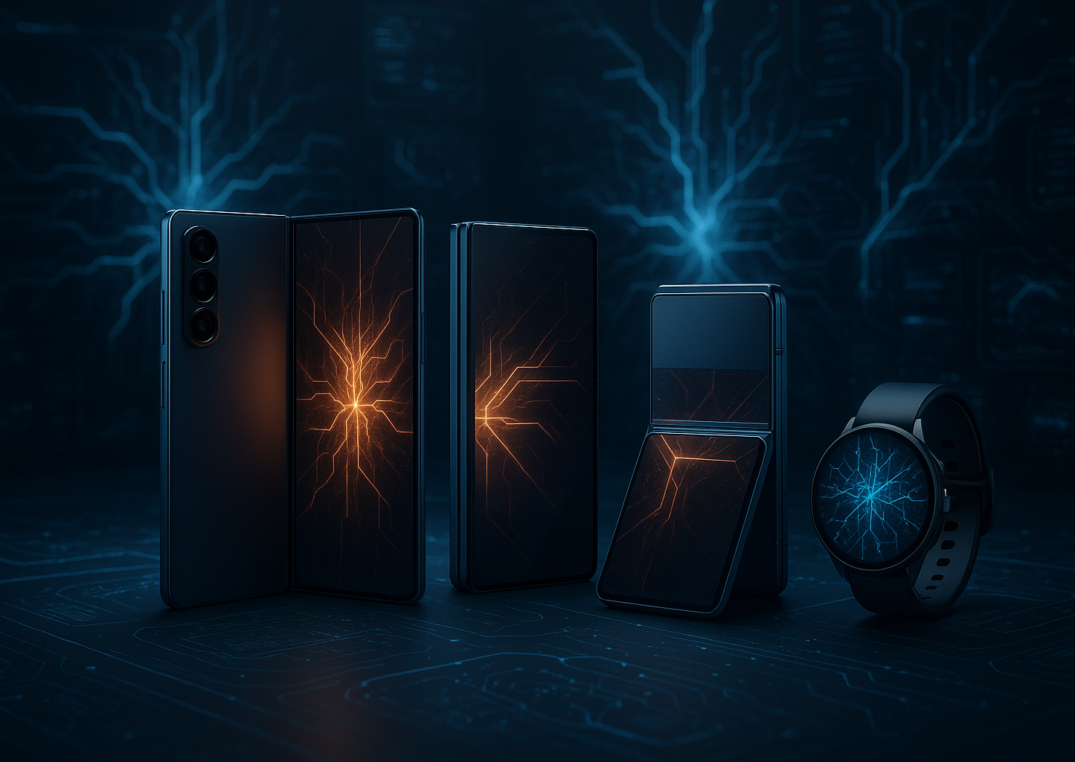
Samsung used its 2026 Galaxy Unpacked event in London to launch three foldable phones, two smartwatches, and a tease of new smart glasses, underscoring how the company is threading artificial intelligence through its mobile ecosystem. While the announcements did not center on cryptocurrency or blockchain features, the AI functions and form factors described at the event are the same building blocks that many finance and trading users rely on: quick capture of information, task automation, and sustained, on-the-go productivity.
AI Integration
The most explicit AI discussion came with wearables and the smart glasses tease. Samsung outlined a slate of AI-driven health tools for Galaxy Watch Ultra 2 and Galaxy Watch 9, including vitals monitoring, sleep apnea tracking, hearing insights, and a new Heart Health score that incorporates blood pressure readings. The company and attending reviewers emphasized that this is not medical-grade or FDA-certified, but it is designed to raise awareness of trends that users can then act on. For professionals who manage long or irregular hours, such feedback can be part of keeping routines stable during volatile workdays.
Samsung also demonstrated the forthcoming smart glasses working with Gemini Intelligence. The demo highlighted hands-free tasks such as making reservations or ordering a coffee, along with productivity features like meeting summaries that move into Samsung Notes. The glasses are designed to work with pinch and tap gestures coordinated with the Galaxy Watch. Although no finance-specific actions were shown, the same interaction model—voice-first assistance, lightweight summarization, and frictionless note capture—maps to the way market participants often triage information and maintain records while multitasking.
Technology Use Case
Across the devices, Samsung’s emphasis on usability improvements supports the kind of always-available AI experiences that professionals increasingly expect from their phones and wearables. The foldables focus on brighter panels, reduced glare from anti-reflective coatings, and less visible screen creases, all of which matter for reading dense content or switching between tools. The Galaxy Z Fold 8 adopts a wide 4:3 main display and a 10:16 cover screen aimed at quick interactions, while the Galaxy Z Fold 8 Ultra increases brightness up to 3,000 nits. Both approaches speak to sustained viewing and rapid checking of updates without constant device repositioning.

Samsung’s watches bring the AI layer to the wrist. The Galaxy Watch Ultra 2 adds a high-brightness display rated at 5,000 nits, a larger 800mAh battery, and a slimmer overall profile compared with the previous generation. The Galaxy Watch 9 focuses on all-day tracking with a lighter aluminum build and a battery rated for roughly 30 hours with the Always-On Display enabled, according to Samsung’s description at the event. In practice, these are the kinds of characteristics—battery longevity, sunlight legibility, and glanceable software—that make AI nudges usable outside the office and over long sessions.
Devices and Core Specs
The Galaxy Z Fold 8 is the headline foldable, featuring a 7.6-inch AMOLED inner panel with a 120Hz refresh rate, a new passport-like silhouette, and a lighter build. Samsung highlighted a “flex titanium” approach—combining a titanium-alloy film with a titanium plate—that aims to improve flexibility and make the crease less noticeable. On the inside, the phone runs a Snapdragon 8 Elite Gen 5 for Galaxy, with a 4,800mAh battery representing a notable capacity lift from the prior generation. Camera hardware includes dual 50MP wide-angle sensors on the back, alongside 10MP main and 10MP selfie cameras.
The Galaxy Z Fold 8 Ultra extends the formula with an 8-inch inner display, a 6.5-inch cover screen (both at 120Hz), and a 5,000mAh battery paired with up to 45W wired charging. Samsung stated that the Ultra can move from zero to 67% in 30 minutes. The camera system steps up to a 200MP main sensor, a 50MP ultrawide, and a 10MP 3x telephoto, with support for 8K video through a new APV codec. Memory options mirror the base Fold—12GB with 256GB or 512GB of storage, or 16GB with 1TB—again using the Snapdragon 8 Elite Gen 5 for Galaxy.
The Galaxy Z Flip 8 is the most compact and the lightest of the phones, with a 6.9-inch dynamic AMOLED inner display at 120Hz and a redesigned FlexWindow for more cover-screen interactions. It features an upgraded Exynos 2600 processor, 12GB of RAM, and 256GB or 512GB of storage, and comes in Cream, Graphite, or Pink. Samsung noted a 4,300mAh battery and faster 45W charging compared with its predecessor. Camera features include hands-free shooting and auto stabilization using a camcorder-style grip with a zoom rocker, plus a mirror view that pairs the selfie camera with the cover panel.
Market Impact
Samsung framed this cycle as a maturation of foldables, pointing to seven years of engineering refinements and, this time, the debut of an “Ultra” tier. The company placed particular attention on the reduced crease and improved comfort in hand, with editors on the ground noting that the Z Fold 8 presents the least conspicuous crease yet shipped by Samsung. The broader competitive context is clear: these devices arrive ahead of a rumored foldable iPhone later this fall, positioning Samsung to set expectations around battery life, screen readability, and the way multitasking should feel on a folding display.
For finance and trading users who already work across multiple apps, the form factors described at Unpacked are about minimizing friction—quick actions on the cover display, wide inner screens that accommodate split views, and bright panels that remain readable outdoors. None of this is crypto-specific, but they are the same ergonomic choices that can make AI helpers and real-time notifications manageable during fast-moving sessions.
Industry Response
Early hands-on perspectives from ZDNET editors cited meaningful gains in the crease and general build quality on the foldables. Reviewers also pointed to the Ultra’s brighter screen and anti-reflective coating as helpful for video and other immersive use. On watches, editors observed that Samsung’s newest features bring it closer to the health-monitoring breadth seen on rival platforms, while underlining that the new blood pressure-related score is intended for guidance rather than diagnosis.
Smart Glasses Tease
Samsung closed with a preview of smart glasses that remain in development, with no firm release date but the possibility of arriving this year. The company highlighted a claimed nine hours of battery life per charge, a case that can recharge the eyewear up to seven times, and collaborations with Gentle Monster and Warby Parker for frame designs. The glasses tie into Samsung’s ecosystem and, in the demo, used Gemini Intelligence for hands-free tasks and meeting summaries that can be saved to Samsung Notes, with watch-based gestures for control. For professionals who juggle information feeds and meetings throughout the day, this type of hands-free AI could become a useful complement to phone and watch workflows.
All of the products announced are available for pre-order now and are expected to ship on August 7, 2026. For those who missed the event, the full presentation remains available on Samsung’s official YouTube channel and through the Samsung Newsroom, with additional commentary from CNET. The announcements speak to how Samsung is baking AI across hardware categories rather than treating it as a single feature—an approach that, even without crypto-specific tools on stage, aligns with how many finance and trading professionals actually use their devices: to capture, summarize, and act on information as efficiently as possible.
