
Research
What is a stablecoin
A stablecoin is a token meant to stay near one dollar. The supply is the number of those tokens outstanding, not a price investors bid.

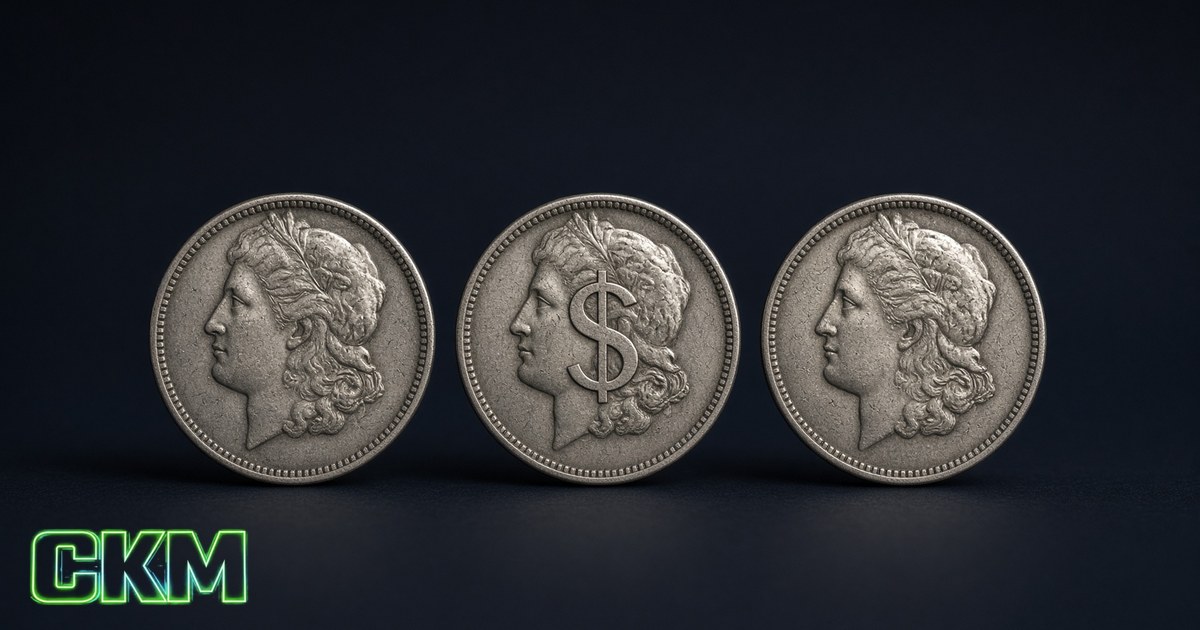
A stablecoin is a token built to stay near one dollar. On October 9, 2026, Stablecoin Beat counted $303.9 billion of them outstanding, about the same as CoinGecko's market cap for Ethereum that evening. The match is a useful picture of the size. It is not what a stablecoin is. A market cap is a price times a number of coins. A stablecoin supply is the dollar value of tokens that are supposed to be worth a dollar each, taken at par.
The point of the token is a dollar that can move on a blockchain. A trader who sells bitcoin and does not want to leave the exchange, or the chain, takes the proceeds in a stablecoin. A borrower who posts bitcoin and wants cash takes a stablecoin. A transfer from one chain to another, when the product is native rather than wrapped, burns the token on the first chain and mints it on the second. Circle's CCTP does that with USDC. The coin the person holds is meant to be the same dollar on either side.
Two coins are most of the stack. On the October 9 tracker, Tether's USDT was $184.1 billion, about 61 percent of the $303.9 billion. Circle's USDC was $73.0 billion, about 24 percent. The rest is a long tail: USDS, Ethena's USDe, DAI, and a few hundred smaller names. A mint or a redemption in USDT or USDC moves the total more than anything that happens further down the list. The tracker a reader opens also changes the total. The same day, other boards printed $291 billion and $311 billion, because they count a different set of coins.
Where the tokens sit is a second number, and it is not the first. About $147 billion of the stablecoins on that tracker sat on Ethereum, and a large share of USDT sat on Tron. The all-chain total can match Ethereum's market cap while the stablecoins that live on Ethereum do not. Adding the two figures together would count the wrong thing twice. Supply is the tokens. The market cap is the ETH. The comparison is here: https://cryptokeymedia.com/news/stablecoin-supply-matches-ethereum
The backing is the question that decides whether the dollar holds. A fiat-backed coin says each token is matched by a dollar, or a Treasury bill, in a reserve. USDT and USDC are in that family, and the reserve is the issuer's report, not a promise from the blockchain. A crypto-backed coin, such as DAI, locks other assets in a contract and mints the dollar token against them. An algorithmic coin tries to hold the peg with supply rules and little reserve. Those have broken before. The word stablecoin does not say which of the three a reader is holding.
A peg is a target, not a law. In a calm hour the token trades at a dollar, or a fraction of a cent away from it. In a rush for the exit it can print 99 cents, or 97, while the issuer redeems at par for the accounts that are allowed to redeem. The price a small holder gets on an exchange is the market. The price a large holder gets at the issuer's window is the redemption. They are not always the same hour. A story that quotes the supply at par is using the target. A story that quotes a depeg is using the market.
Stablecoins are also the margin under a lot of the trading this desk covers. A USDT-margined perpetual posts the stablecoin as collateral and bets the price. The stablecoin is not the bet. It is the chip. If the token itself slips from a dollar, the margin is worth less than the screen said.
Nothing in the design makes the token a bank deposit. A deposit at a bank has government insurance up to a limit. A stablecoin has the issuer's reserve and the reader's ability to sell. The label is the start of the check. The reserve report is the rest.
What comes next is the next print of the supply, and it will not match on every board. Stablecoin Beat's $303.9 billion was the reading that sat next to Ethereum on October 9. A mint or a redemption will move it. The definition does not. A stablecoin is a token meant to stay near one dollar, and the supply is how many of those dollars the trackers can count.