


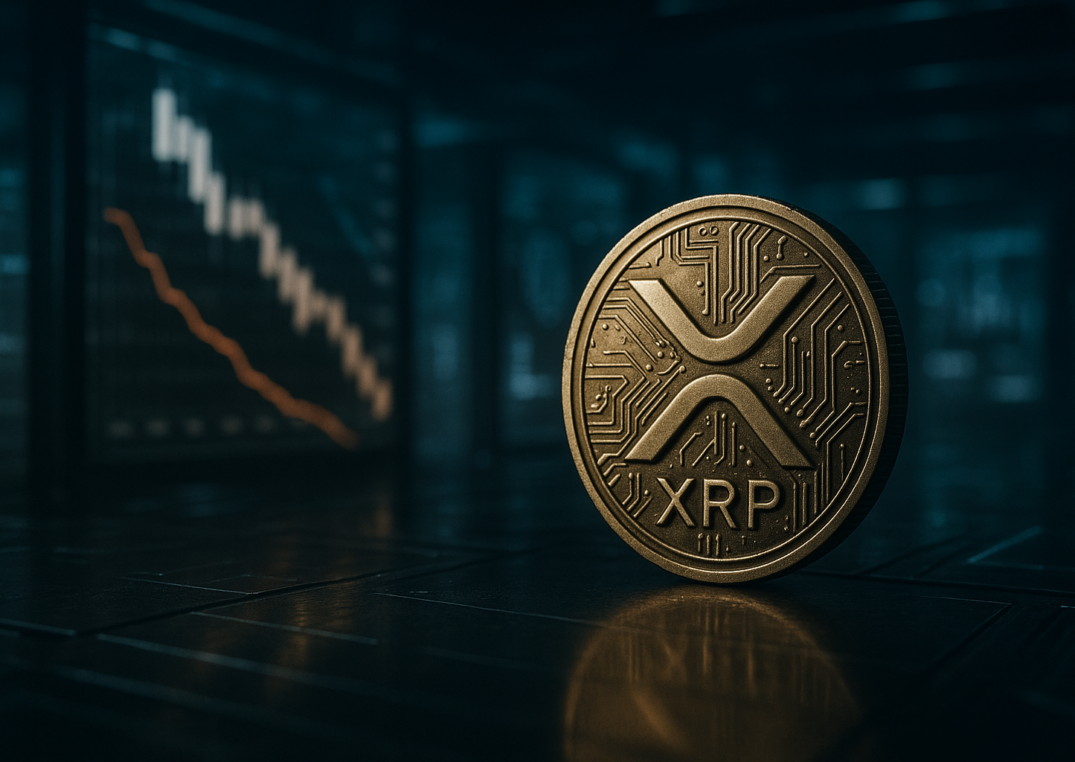
XRP Sentiment Hits Eight-Month Low as Social Interest Fades; Contrarian Signals Emerge Amid Mixed Binance Flows
Meta Description: XRP sentiment drops to an eight-month low, Santiment says. Price hovers near $1.15 as large Binance outflows and rising whale inflows signal two-way positioning.
Key Takeaways
- Santiment reports on June 12, 2026 that XRP’s weighted sentiment has fallen to its lowest level since October 2025 as social interest wanes.
- XRP traded around $1.15, up roughly 2% over 24 hours, yet remains down about 22% month-on-month and nearly 69% below its July 2025 all-time high of $3.65.
- On-chain data cited shows roughly 465 million XRP withdrawn from Binance between June 3–11 in transactions larger than 1 million tokens.
- Whale inflows to Binance over the past 30 days rose to about 1.33 billion XRP, the highest in two months, indicating heightened large-holder activity.
- Sentiment weakness comes despite ongoing XRP Ledger development and institutional product launches; Santiment notes some of XRP’s strongest rebounds have occurred when crowds are most disinterested.
Investor mood around Ripple’s XRP has deteriorated sharply, with blockchain analytics firm Santiment stating on June 12, 2026 that the token’s weighted sentiment has dropped to its lowest level since October 2025. The pullback in social engagement and the balance of negative versus positive commentary comes even as development across the XRP Ledger continues. Santiment adds that historically, such pockets of disinterest have aligned with some of XRP’s most forceful rebounds, putting a spotlight on positioning as traders weigh whether capitulation-like sentiment can catalyze a contrarian move.
Market Movement
XRP edged about 2% higher over the past 24 hours to roughly $1.15 at the time of writing, according to CoinGecko figures referenced in the source material. That bounce has done little to improve the broader picture: the token remains approximately 22% lower than a month ago and sits almost 69% beneath its July 2025 peak of $3.65. The gap to that prior high underlines how far the asset still needs to run before long-term investors are made whole, and it frames the recent uptick as modest relief within a deeper drawdown.
The retracement has worn on sentiment. Santiment’s “weighted sentiment” metric blends social volume with the ratio of positive to negative commentary. By that measure, XRP is now at an eight-month low, indicating not only fewer conversations about the asset but also a tilt toward skepticism in those that remain. Price weakness likely contributed to the mood shift, yet Santiment also attributes the disaffection to fatigue over unfulfilled catalysts, even though Ripple’s legal situation has broadly cleared compared with prior years.
From a market structure perspective, the sharp month-on-month decline suggests supply has been more aggressive than demand in recent weeks. Rallies have met willing sellers, while dips have lacked the kind of immediate dip-buying that characterized stronger phases earlier in the cycle. Short-term traders often interpret such stretches as “repair” periods in which price attempts to build a base. Whether $1.15 proves a durable staging point depends on the interplay of flows, liquidity, and sentiment in the sessions ahead.
Trading Activity
On-chain and exchange flows present a more nuanced picture beneath the surface. Data cited in the source from CryptoQuant indicates that between June 3 and June 11, approximately 465 million XRP left Binance in large transactions—each exceeding 1 million tokens. Outflows of that scale can reduce immediately available spot supply on the venue if they reflect withdrawals to self-custody or long-term storage. Leaner exchange inventories sometimes dampen near-term sell pressure, though the impact depends on whether parallel inflows replenish the order book.
At the same time, data shared by Arab Chain shows whale inflows to Binance climbed to about 1.33 billion XRP over the last 30 days, the highest level in two months. Elevated inflows do not automatically mean those tokens will be sold, but they do signal that large holders are becoming more active and, at a minimum, want assets positioned on-exchange—whether for liquidity access, hedging, or opportunistic trading. The combination of notable withdrawals in one window and rising whale deposits over a longer lookback points to two-way positioning rather than a one-directional exodus.
For traders, these cross-currents matter. Significant outflows can tighten visible sell-side depth and make prices more sensitive to buy pressure. Conversely, sizeable deposits from whales can thicken the order book and ready inventory for moves in either direction. In practice, the net effect will depend on how these flows interact with daily spot demand and any concurrent activity in derivatives markets, where large holders can offset or amplify their spot exposure. While derivatives figures are not provided in the source, the spot flow pattern alone suggests a market preparing for potential volatility rather than a settled trend.
Investor Sentiment
Santiment’s reading places XRP sentiment at an eight-month low, reflecting both a drop in discussion volume and a heavier skew toward negative commentary. The analytics firm also observed that traders appear tired of waiting for a decisive positive catalyst, despite greater legal clarity around Ripple compared with prior years and persistent talk of institutional adoption. That disconnect—between expectations for fundamental progress and price performance—has contributed to the malaise.
There is a contrarian angle to consider. “Some of XRP’s strongest rebounds have occurred when the crowd became the most disinterested,” Santiment wrote. Apathy can leave positioning light as sidelined or fatigued holders capitulate, reducing overhead supply and lowering the bar for an upside surprise if a spark does materialize. But contrarian setups are not guarantees; they rely on a catalyst—or at least the removal of a headwind—to convert potential energy into price follow-through.
Analyst commentary cited in the source underscores that split view. Ali Martinez recently flagged a Tom DeMark Sequential buy signal on XRP, a technical pattern some traders interpret as exhaustion in a downtrend. Yet he has also suggested that a deeper move toward $0.90, if reached, could offer an even stronger entry level. Together, those notes illustrate a market that sees scope for a rebound but is not unanimous about timing or depth, which itself can deter consensus positioning.
Broader Market Context
The macro backdrop has provided a mixed hand. The source notes that optimism swept through stocks, gold, and silver after a recent announcement from former U.S. President Donald Trump that planned strikes on Iran were called off. In contrast, Santiment observed a muted reaction across crypto, including XRP. That divergence is not unusual: digital assets can trade on idiosyncratic factors—such as ecosystem developments and token-specific flows—even when traditional risk assets respond to geopolitical de-escalation or macro headlines.
For XRP specifically, ongoing development around the XRP Ledger, including tokenization initiatives and new institutional products, has not yet translated into sustained price appreciation. Builders may continue to ship features, partnerships, and integrations, but market cycles often require time for those efforts to register in usage metrics that the broader market rewards. The gap between activity on-chain and price discovery is a recurring theme across digital assets and tends to compress only once participants see durable traction in volumes, fees, or mainstream access points.
Industry Impact
Periods of weak sentiment test investor conviction and can shape how capital allocates across the crypto stack. For the XRP ecosystem, the current dynamic—falling social interest amid continued development—suggests that narratives alone are not driving flows. That can be constructive for long-term health if it nudges the community and external observers to focus on measurable outcomes like ledger throughput trends, tokenization pilots, and real-world financial integrations instead of speculative exuberance.
Institutional appetite remains a key variable. The source references a perception in the market that talk of institutional adoption has not yet translated into meaningful gains for XRP holders. Institutional engagement often proceeds in increments: proof-of-concept experiments, limited-scope deployments, and eventual scaling if ROI is clear. From a pricing standpoint, those steps may be obscured until they aggregate into visible demand for liquidity and hedging. In that sense, the lag between ecosystem work and price can persist longer than retail traders expect, particularly if broader crypto risk appetite is subdued.
Liquidity distribution across venues also matters. Large outflows from a single exchange such as Binance can change where price discovery occurs if tokens transition to self-custody or migrate to other platforms with different market structures. Conversely, the rise in whale inflows to Binance implies that at least part of the active supply prefers that venue’s depth and tools for execution. Either way, the net effect is a rebalancing of liquidity that may influence slippage, spreads, and the resilience of order books during volatility.
What This Means for Crypto Markets
The push-and-pull between sentiment and flows around XRP reflects wider themes across digital assets in 2026. Social metrics can swing sharply with price, but translation into trend reversals typically requires a catalyst—be it a macro shift, regulatory clarity, or a concrete product milestone that expands utility. In the absence of a clear driver, markets often oscillate in ranges where liquidity providers, whales, and systematic traders dominate the tape.
For portfolio managers, the current setup argues for attention to positioning rather than headlines alone. The combination of historically weak sentiment, evidence of two-way exchange flows, and a modest price bounce suggests that liquidity is consolidating. In such phases, risk management around entry points, position sizing, and time horizons can matter more than directional conviction. If sentiment is near a local nadir, incremental good news can travel farther; if new negatives emerge, fatigued holders may still opt to lighten exposure, extending the repair period.
Traders who rely on technical frameworks, such as the Tom DeMark Sequential highlighted by Martinez, will be watching for confirmation—breaks of recent swing highs, improving participation on up days, or momentum divergences—before declaring the downtrend finished. Fundamentally oriented investors may look to sustained growth in XRP Ledger activity, tangible tokenization outcomes, or institutional product uptake to validate a longer-term thesis.
Conclusion
Santiment’s June 12 assessment places XRP sentiment at an eight-month low, capping a month of price pressure that left the token near $1.15—still well short of its July 2025 zenith. Under the hood, on-chain and exchange data depict a market in transition: sizable withdrawals from Binance suggest some supply is moving off-exchange, even as whale inflows over the past month indicate large players are positioning for the next move. Development around the XRP ecosystem continues, yet traders remain wary after a stretch in which anticipated catalysts failed to deliver durable upside.
That weariness is exactly what contrarians look for. As Santiment notes, some of XRP’s strongest rebounds have unfolded when the crowd is most disengaged. Whether this episode fits that historical pattern will depend on whether a credible spark emerges and whether the current liquidity configuration allows price to extend beyond short-covering and opportunistic bounces. For now, the signal is that sentiment has reset, positioning is being reshuffled, and XRP’s next directional leg will likely be dictated less by conversation volume and more by what the flows—and the tape—decide.
