


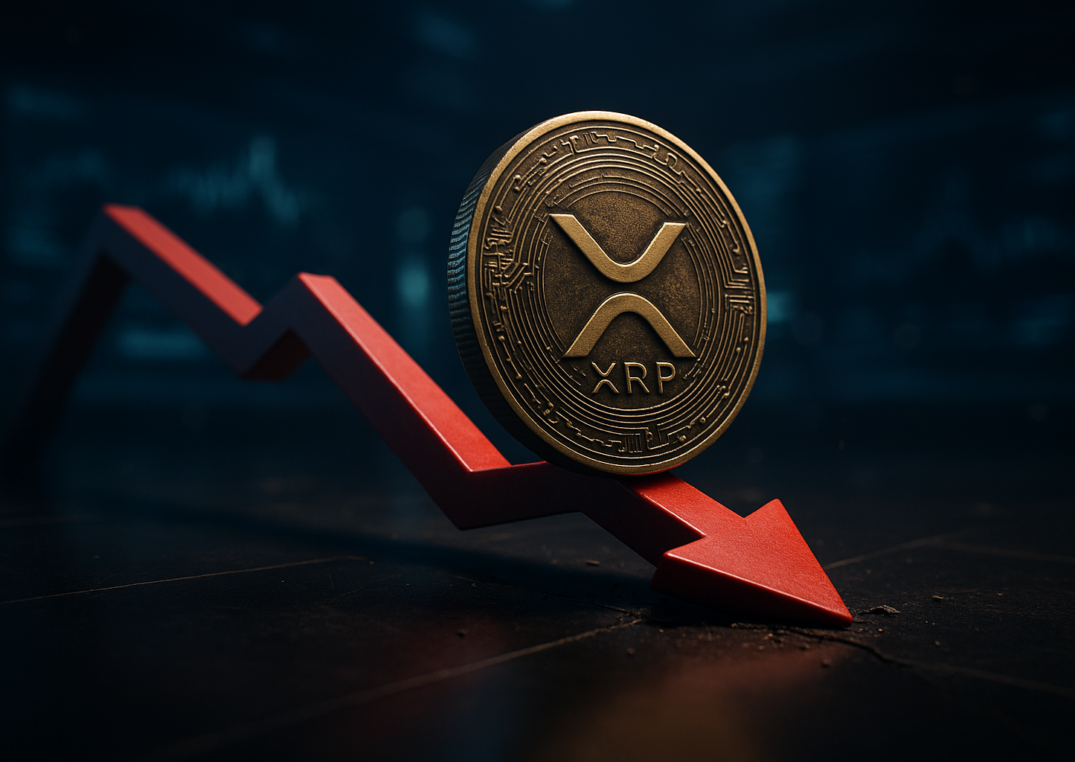
XRP Tests $1 Support as Liquidations Mount and Derivatives Activity Unwinds
Meta Description: XRP slid to $1.02 as $9M in long liquidations hit and derivatives open interest fell on Binance and Bybit, signaling weak spot demand and capitulation.
Key Takeaways
- XRP fell to $1.02 on Friday, June 26, 2026—its weakest level since February—before a modest rebound, leaving the $1 threshold in focus.
- Roughly $9 million in long liquidations were triggered as price neared $1.07 on Wednesday, June 24, the largest daily loss for bullish leverage since Feb. 5; Binance accounted for about $4.5 million.
- Derivatives risk is resetting: Binance XRP open interest dropped to about $205 million and Bybit to roughly $185 million; aggregate OI stands near $2.34 billion, while futures turnover has slid to about $2.84 billion from more than $30 billion a year earlier.
- On-chain profitability has deteriorated: Glassnode’s 90‑day profit‑to‑loss ratio fell to 0.33, the weakest reading since August 2022, indicating intensifying capitulation.
- Risk‑adjusted returns remain negative: the 30‑day Sharpe ratio sits near −0.29; its Z‑score around −1.57 with seven‑day Sharpe momentum near −0.09.
- Perpetual‑to‑spot flow looks closer to neutral: Binance’s perpetual‑to‑spot volume imbalance is near 0.51 with a 30‑day Z‑score of roughly 0.17.
- Macro drag persists: Bitcoin dipped to about $58,100 on Thursday, June 25; Ethereum fell toward $1,550; the total crypto market briefly slipped below $2 trillion, with 87% of tracked non‑stablecoin assets declining in June.
XRP’s retreat toward the $1 mark is testing whether one of crypto’s largest assets can hold a level that has taken on outsized significance after months of sliding prices. The token dropped to $1.02 on Friday, June 26, 2026, according to CryptoSlate data, as a market‑wide selloff pushed traders to cut risk. While XRP bounced modestly from the intraday low, the recovery has not eased concerns that downside momentum could intensify if spot demand fails to stabilize around parity.
Market Movement
XRP’s slide this week comes after a steady deterioration in price action throughout late spring. The $1 area—more psychological than technical—has emerged as a practical line of defense because of its role as a round‑number anchor and because recent positioning clustered nearby. A decisive breach would risk exposing thin liquidity lower down the book, particularly after leverage has been reset and speculative interest has cooled.
Price action accelerated midweek as the token drifted toward $1.07 on Wednesday, June 24, tipping a cluster of forced deleveraging. By Friday, XRP briefly printed $1.02—its lowest level since February—before dip buying and a slower pace of liquidations allowed for a shallow rebound. The balance now sits between two forces: on one side, the clearing of leverage that can reduce the probability of another liquidation cascade; on the other, a fragile spot bid that leaves little cushion if parity gives way.

The current setup places elevated weight on incremental flows from unlevered buyers. Without visible improvement in spot demand, any relief rally risks stalling into overhead supply from traders looking to exit at or near breakeven after enduring drawdowns over the past several months.
Trading Activity
Derivatives positioning has retrenched in lockstep with price. Data compiled by CryptoQuant show that roughly $9 million in XRP long positions were liquidated on Wednesday as the market probed $1.07, the largest daily hit to bullish leverage since Feb. 5. Binance accounted for around half of that tally—about $4.5 million—underscoring how concentrated flows on a single venue can influence intraday dynamics, particularly when liquidity is already thinning.
Open interest has stepped down across major platforms. On Binance, XRP OI fell to roughly $205 million, its lowest since March 22, while Bybit’s OI retreated to about $185 million, returning to levels last seen on June 6. The synchronized pullback across two of the largest venues suggests a broad de‑risking rather than an idiosyncratic venue event. Some traders capitulated via forced selling; others appear to have closed positions voluntarily as momentum faded.
Across tracked exchanges, total XRP open interest sits near $2.34 billion. Futures turnover has contracted even more sharply, to about $2.84 billion from more than $30 billion over the comparable period last year—an over 90% year‑on‑year decline. The divergence between OI (a stock of outstanding positions) and volume (a flow measure of contracts changing hands) highlights how much speculative churn has drained from the market since XRP’s busier phase in 2025.
This thinning of liquidity and leverage cuts two ways. With fewer crowded longs, the risk of cascade‑style, liquidation‑led selloffs may be diminished. At the same time, reduced activity narrows the pool of directional capital available to absorb large orders, potentially amplifying short‑term price moves if a new impulse—positive or negative—arrives.
One gauge looks closer to neutral. Binance’s XRP perpetual‑to‑spot volume imbalance stands near 0.51, with a 30‑day Z‑score around 0.17. Perpetual contracts still account for a larger share of activity than spot, but the relationship has drifted back towards recent averages. Earlier in April and May, during XRP’s rallies, perpetual activity outpaced spot by a wider margin; that gap has narrowed as speculative flows eased and prices rolled over.
Investor Sentiment
On‑chain metrics reinforce the picture of stress. Glassnode’s 90‑day moving average profit‑to‑loss ratio for XRP has slid to 0.33, its weakest reading since August 2022. A ratio below 1 indicates that realized losses dominate realized profits; at 0.33, investors are recording roughly one unit of profit for every three units of loss when coins move on‑chain. That mix is characteristic of capitulation, when holders accept losses after prolonged declines and the market transfers supply from weaker to stronger hands.
Capitulation can mark progress toward a durable bottom by flushing out late longs and shifting supply to buyers with longer time horizons. It can also persist if demand remains tepid. Each leg lower pushes more of the circulating supply into unrealized loss, increasing the likelihood that any rebound encounters sell pressure from investors seeking to exit close to their entry points. That dynamic can create overhead resistance and delay trend reversals even when leverage has been materially reduced.
Risk‑adjusted returns have not offered a compelling counterweight. CryptoQuant’s XRP risk‑adjusted trend indicator on Binance shows the 30‑day Sharpe ratio at approximately −0.29, indicating that recent returns have not compensated for volatility. The Sharpe Z‑score, near −1.57, signals underperformance versus historical norms, while seven‑day Sharpe momentum remains slightly negative around −0.09. For traders who were forced out this week—or who cut risk preemptively—these readings offer little incentive to re‑enter aggressively until volatility softens or returns improve.
Broader Market Context
XRP’s downdraft is unfolding against a weaker macro backdrop for digital assets. Bitcoin briefly fell to about $58,100 on Thursday, June 25—its lowest since September 2024—before stabilizing toward $60,000. Ethereum extended underperformance, sliding toward $1,550 and logging a third consecutive daily loss. The total crypto market value slipped below $2 trillion during Bitcoin’s dip, compressing risk appetite across majors and long‑tail tokens alike.
Market breadth deteriorated through June. Of 85 non‑stablecoin assets tracked by CryptoRank, 87% declined on the month while only 13% advanced. The average return was −8.6% and the median −12.3%, indicating that weakness extended well beyond a small set of underperformers. Among the ten largest non‑stablecoin assets, only two were positive for the second quarter: Hyperliquid’s HYPE, up 72.6% after a June rally briefly pushed its quarterly gain above 100%, and Tron’s TRX, up 4.1%. The rest remained in negative territory.
This lack of breadth reduces the likelihood of a supportive rotation into XRP from other tokens. In stronger markets, sharp single‑asset drawdowns can attract bargain hunters deploying profits earned elsewhere. In a risk‑off tape where most assets are under pressure, capital preservation often takes priority over bottom‑fishing, limiting the fuel for reflexive rebounds.
Industry Impact
The combination of falling prices, weaker derivatives activity, and mounting realized losses has near‑term implications for exchanges, liquidity providers, and project ecosystems. For trading venues, thinner OI and lighter turnover compress fee revenue and may nudge market makers to recalibrate inventory buffers, particularly around psychologically significant levels such as $1. That can widen spreads during fast markets and contribute to occasional air pockets when large orders cross.
For leveraged traders and structured product desks, this phase reinforces the need for tighter collateral management and clearer liquidation thresholds. Mid‑week flows showed how clustered positioning near round numbers can accelerate a selloff once stops and margin calls begin to trigger. The subsequent reset lowers systematic risk but can leave liquidity brittle until two‑way interest rebuilds.
Within the XRP ecosystem, spot demand becomes the decisive variable. With derivatives positioning less stretched than earlier in the quarter, incremental flows from unlevered buyers carry more weight in determining whether $1 serves as a durable base or a staging area for another leg down. The negative risk‑adjusted profile suggests patience among allocators awaiting either stronger momentum signals or evidence that realized losses are tapering—conditions that typically accompany a more stable accumulation phase.
What This Means for Crypto Markets
Two competing paths are visible. A constructive path would see the recent liquidation wave complete its work, with derivatives risk normalized and forced sellers largely cleared. In that scenario, even modest spot inflows could stabilize price action near $1 and reduce realized loss intensity as coins transfer to longer‑horizon holders.
The risk case centers on the spot bid. If demand remains thin and the token slips decisively below $1, the market could face a pocket of limited support as sidelined traders await cheaper levels and recent buyers look to reduce exposure on rebounds. With OI and volume already compressed, directional impulses may travel further before meeting resistance, amplifying intraday swings.
For market participants, the practical takeaways are straightforward:
- Respect liquidity pockets around round numbers. Crowded stops and margin thresholds can convert shallow pullbacks into outsized moves.
- Watch the mix of activity. A more balanced perpetual‑to‑spot relationship, combined with stabilizing realized loss metrics, would be consistent with an early base‑building phase.
- Evaluate risk‑adjusted signals. Sustained improvement in the 30‑day Sharpe ratio and its momentum often precedes a more durable trend change.
Against a cautious macro backdrop—Bitcoin below recent ranges, Ethereum underperforming, and broad June weakness across non‑stablecoins—the burden of proof remains on buyers. Without clear evidence of stronger spot participation, rallies may struggle to extend as overhead supply emerges from holders seeking to exit near cost.
Conclusion
XRP’s slide to $1.02 on June 26 and the mid‑week liquidation burst underscore a market in reset: leverage is lighter, derivatives activity is thinner, and realized losses are running at their fastest pace since 2022. That mix can help the market find a floor by clearing crowded longs, but only if spot demand firms to defend the $1 area. Until risk‑adjusted returns turn positive and on‑chain profitability stabilizes, traders are likely to treat bounces as opportunities to lighten exposure rather than signals of a new uptrend. With breadth weak across digital assets and capital rotating into cash rather than between tokens, the next decisive move in XRP will depend less on leverage and more on whether unlevered buyers are willing to step in at—or below—parity.
