


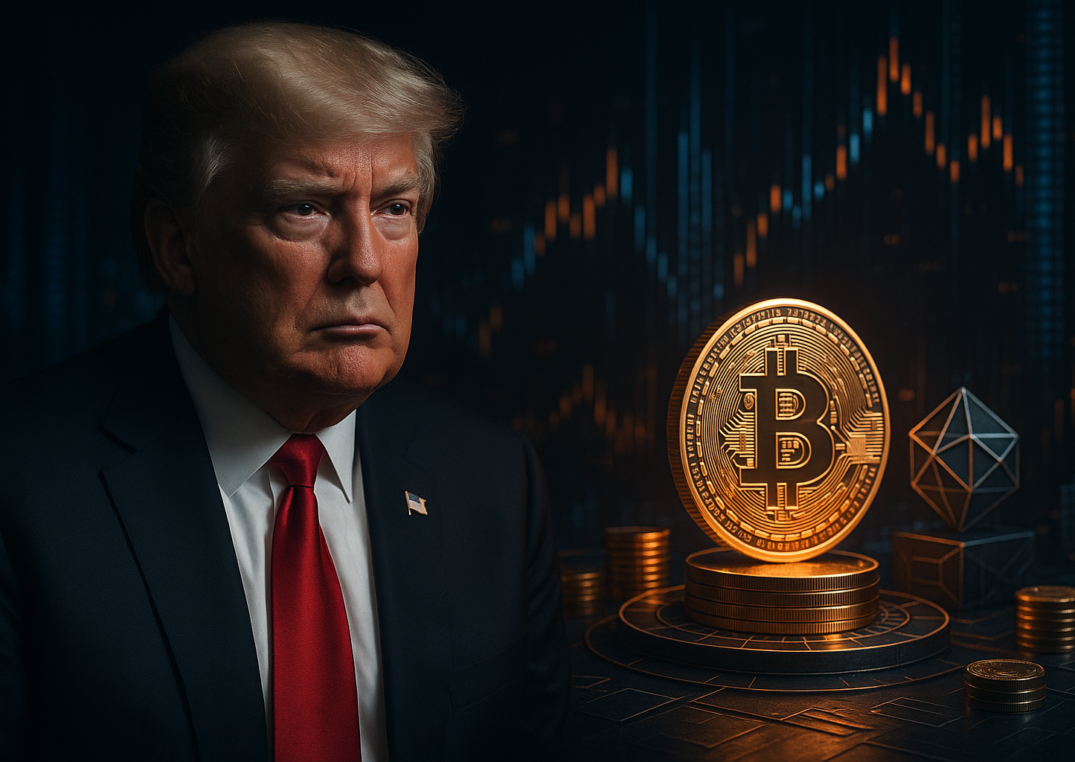
Trump Floats U.S. Equity Stakes in OpenAI and xAI; Anthropic’s Absence from Talks Could Bolster Its IPO
Meta Description: Trump’s plan to take U.S. stakes in OpenAI and xAI leaves Anthropic out of talks, creating a potential valuation edge as it files for a near-$1T IPO.
Key Takeaways
- President Donald Trump said the U.S. may take equity stakes in major AI firms, naming OpenAI and xAI; Anthropic is not part of those talks, according to reports.
- The White House plans to host AI executives as early as next week to discuss ownership structures and public benefit mechanisms.
- Anthropic filed a confidential S-1 on June 1 after a $65 billion Series H that valued the company at about $965 billion, while OpenAI was valued near $852 billion in March and is preparing its own listing.
- OpenAI has discussed seeding a “Public Wealth Fund” with donated equity; a government stake modeled at 10% of OpenAI’s last valuation could shift roughly $85 billion from existing shareholders and IPO buyers.
- The administration previously took an estimated 10% stake in Intel in 2025 and holds positions in IBM and several quantum firms, providing a recent playbook for public ownership.
- Political pressure spans parties: Senator Bernie Sanders has floated a one-time 50% ownership transfer, paid in shares, for the largest U.S. AI companies.
President Donald Trump said the U.S. government is weighing equity stakes in leading artificial intelligence companies including OpenAI and xAI, and aims to gather industry CEOs at the White House as early as next week to discuss the approach. Reports indicate Anthropic is not currently in those equity conversations—an omission that may strengthen its ownership narrative as the company races toward a public listing near the $1 trillion mark. With OpenAI also preparing an IPO and exploring ways to share gains with taxpayers, the policy direction could shape cap tables, governance, and valuation dynamics across the AI complex.
Market Movement
The prospect of direct U.S. ownership in AI leaders is landing at a delicate time for risk assets and for investors positioning around a potential wave of marquee listings. Anthropic filed a confidential S-1 on June 1 following a $65 billion Series H round that priced the company at roughly $965 billion. OpenAI’s private valuation reached about $852 billion in March, and the company has engaged with administration officials for more than a year on public ownership concepts. Those milestones pull the AI trade into sharper focus for public markets, where investors have been calibrating exposure to the sector’s long-duration growth prospects and capital intensity.
While the article flow centers on private market valuations and pending listings, the implications extend into public equity indices, active management strategies, and, by extension, crypto markets that often reflect shifting risk appetite tied to technology narratives. Traders typically reprice growth trajectories when policy intersects directly with corporate ownership, especially if new structures could influence dilution, voting rights, or future cash flows. The immediate move in digital assets may be harder to isolate without specific price data, but the policy signal itself tends to register in cross-asset positioning when it alters expected governance or supply dynamics in closely watched issuers.

Trading Activity
For equity market participants, the key mechanics revolve around how any government position would be obtained and structured. If the U.S. were to seek a stake in OpenAI at or near its last indicated private valuation, a 10% holding would represent roughly $85 billion in value. Whether that exposure comes via newly issued shares, secondary purchases, or donated equity would meaningfully change the dilution math and cash proceeds. IPO investors typically scrutinize these details because share supply, voting power, and preferential rights can shift pricing, bookbuilding demand, and the tenor of the first weeks of trading.
Anthropic’s absence from the reported equity talks could simplify its offering narrative: a cleaner cap table heading into the listing, fewer perceived policy encumbrances, and potentially clearer lines around governance. That does not remove regulatory risk or broader political scrutiny; it simply differentiates Anthropic’s ownership profile from peers at a critical moment for valuation discovery. For portfolio managers modeling scenarios across the expected AI IPO cohort, variations in state involvement may become a distinct line item in relative-value comparisons.
Investor Sentiment
Sentiment is now anchored to three intersecting debates. First is whether taxpayer exposure to AI profits should be formalized via ownership stakes, an idea Trump framed as “almost a partnership with the American public.” Second is whether voluntary contributions of equity, such as OpenAI’s concept of donating shares to seed a Public Wealth Fund, could satisfy calls for broader public participation without imposing heavy-handed expropriation. Third is the extent to which these frameworks would influence corporate strategy, capital allocation, and operational independence over the long term.
The policy spectrum is wide. On one end are negotiated stakes and public-benefit funds; on the other is Senator Bernie Sanders’ proposed one-time, 50% ownership transfer in shares for the largest U.S. AI companies. The outer bounds of that discussion shape risk premia: higher perceived political intervention can lead investors to demand steeper discounts at IPO, tighter covenants, or clearer guardrails on voting control. By contrast, firms perceived as less entangled in near-term political negotiations may be awarded cleaner multiples if fundamentals and disclosures support it.
Broader Market Context
There is recent precedent for U.S. public ownership of strategic technology assets. The administration took an estimated 10% stake in Intel in 2025 and holds positions in IBM and several quantum companies, steps that fit within a broader industrial-policy frame. That playbook suggests a range of tools—equity stakes, incentives, and public-private partnerships—that can be adapted to the AI stack, from foundation models to compute infrastructure and advanced research. For investors, the details of how those tools are applied matter as much as the headline: they determine cash needs, equity issuance, incentives for future R&D, and potential constraints on corporate actions.
Against that backdrop, OpenAI and Anthropic are on parallel paths to the public market but with increasingly distinct risk contours. OpenAI has engaged the White House on an ownership concept for more than a year and floated a Public Wealth Fund idea in April that could turn donated equity into a broad-based public asset. Anthropic, by contrast, finds itself outside the talks—after a high-profile rift with Washington earlier this year—just as it prepares for a stock market debut.
Industry Impact
Anthropic’s distance from federal ownership discussions stems from a contentious episode earlier in the year. The company refused a Pentagon ultimatum over unrestricted military use of its Claude model in February. The administration subsequently halted federal business with the company on February 27, and the Pentagon designated Anthropic a supply-chain risk, the first such label for a U.S. firm. Anthropic sued in March and lost a bid on appeal in April, though Trump later signaled a defense deal could still be possible. Whatever the eventual policy landing, that sequence effectively kept Anthropic out of the current equity conversation.
Heading into an IPO, that separation may become an advantage. Public investors often prize simplicity in ownership and governance. The absence of a government stake can be read as lower policy overhang, at least on the cap-table level. If OpenAI were to proceed with a government participation model—via donation, allocation, or negotiated acquisition—analysts would need to construct parallel forecasts capturing voting rights, board influence, and any distribution or lockup constraints attached to public shares or public-benefit structures. The valuation gap between two firms pursuing similar markets can widen quickly if governance risk is priced differently.
For xAI, the inclusion in Trump’s remarks places the company under the same potential ownership lens as OpenAI. Specifics on stake sizes, voting arrangements, and timing remain to be determined, and the White House meeting planned as early as next week could clarify whether participation will be uniform across companies or tailored to each entity’s structure and capital needs.
What This Means for Crypto Markets
Crypto markets often react to shifts in macro and tech policy that influence broader risk-taking. While digital assets and AI equities are distinct, investors frequently trade the two themes together because they share a common growth driver in next-generation computing. A concrete U.S. plan to hold equity in flagship AI companies could have several knock-on effects that crypto traders will watch:
- Risk Sentiment: Clearer policy guardrails may ease uncertainty, supporting appetite for growth exposures. Conversely, heavy dilution or expansive state control could lift risk premia and weigh on risk-on trades.
- Liquidity Rotation: Large AI IPOs can absorb capital that might otherwise cycle through tech-adjacent themes, including AI-linked tokens. Allocation calendars and lockup expirations can influence near-term flows.
- Index and ETF Dynamics: Once public, AI leaders could reshape benchmark composition and factor exposures. Crypto often tracks cross-asset flows when investors rebalance toward or away from growth indices.
- Tokenization and Public-Benefit Structures: If a Public Wealth Fund seeded by donated equity advances, it may revive debate about tokenized public assets and on-chain distribution mechanisms—even if the initial implementation is purely traditional-market based.
Traders will also parse whether the policy conversation expands to compute, data-center infrastructure, and semiconductor ecosystems that anchor AI capacity. To the extent these components influence sentiment toward innovation and high-beta tech, they can spill over into the digital-asset complex through changes in volatility, funding conditions, and cross-asset correlations.
Governance, Valuation, and the Mechanics of Dilution
Any new state ownership introduces layers of governance. Investors will focus on voting versus non-voting shares, special rights, and any policy-linked restrictions on mergers, capital returns, or data practices. The shape of that governance determines whether public ownership functions mainly as a passive return-sharing mechanism or as an active lever influencing strategy.
Valuation will key off earnings power and growth, but ownership structures can swing multiples. A hypothetical 10% stake placed into OpenAI at its last private valuation implies an $85 billion shift in economic value. If those shares are newly issued, the marginal buyer must account for added supply. If they are donated or reallocated without cash proceeds, existing holders face dilution without offsetting capital. If the state purchases shares from insiders, dilution may be limited but free float and liquidity could change depending on lockups and resale terms.
For Anthropic, the absence of such moving parts at the outset could translate to more straightforward modeling. Investors will still require transparency on compute costs, model cadence, enterprise adoption, and safety governance—but they may apply less of a governance discount if they perceive fewer policy-driven contingencies.
Policy Timetable and What to Watch Next
The administration’s meeting with AI executives, planned as early as next week, is expected to address stake sizes, voting rights, and which companies will participate. OpenAI’s prior engagement with the White House and its April proposal to seed a Public Wealth Fund with donated equity suggests one possible pathway for aligning public benefit with private innovation. Parallel political proposals, such as Senator Sanders’ concept of a one-time 50% share transfer for top AI firms, bracket the upper bound of potential outcomes.
Key markers for markets over the coming weeks include: any formal announcement on the structure of public stakes; indications from OpenAI and xAI on governance and cap-table impacts; and signals from Anthropic’s IPO process about offer size, lockup terms, and index eligibility. Each of these inputs helps translate political headlines into financial models and, ultimately, into pricing outcomes on day one of trading and beyond.
Historical Frictions and the Anthropic Exception
Anthropic’s current stance cannot be understood without the earlier dispute with Washington. The company’s refusal to accept unrestricted military use of Claude triggered a cascade—suspension of federal business on February 27, a Pentagon supply-chain risk label, litigation in March, and an unsuccessful appeal in April. While Trump later indicated a defense deal could still be possible, those steps effectively removed Anthropic from the present equity-stake dialogue. Paradoxically, that isolation now appears to confer a potential advantage as the firm approaches the public markets with fewer questions about state ownership.
If investors conclude that the perceived policy premium attached to OpenAI’s cap table outweighs the benefits of a Public Wealth Fund, Anthropic could command relatively stronger demand at pricing. Conversely, if a negotiated framework demonstrates limited dilution, minimal interference, and a credible route to sharing upside with taxpayers, OpenAI may narrow or erase any governance discount. In either case, the valuation spread between close competitors may hinge on the fine print of ownership rather than on technology alone.
Scenario Analysis for Portfolio Construction
Asset allocators considering the pending AI listings are likely running scenario trees around three nodes:
- Government Stake Adopted: Stake size is modest; voting rights are limited; dilution is transparent. Expected outcome: slightly wider IPO discount, but manageable, with policy risk partially priced.
- Public Wealth Fund Donation: Equity is contributed with sunset provisions and guardrails, minimizing control concerns. Expected outcome: lower overhang; potential investor acceptance if disclosure is robust.
- No Government Stake: Company proceeds with a conventional cap table. Expected outcome: cleaner governance story; valuation depends more heavily on growth, margins, and competitive moat.
These nodes will be weighted against familiar IPO factors—allocation discipline, cornerstone participation, research coverage, and lockups. In the background, macro conditions and rates sensitivity will continue to mediate appetite for long-duration growth exposure, including AI and adjacent innovation plays that intersect with digital assets.
What This Means for Crypto Markets
For crypto-native investors, three threads are worth attention. First, a credible pathway for public participation in AI profits could reduce uncertainty and support broader risk-taking, a tailwind for high-beta segments of digital assets that tend to rally when innovation narratives are ascendant. Second, competing capital needs around mega-cap tech IPOs may temporarily absorb liquidity that might otherwise chase momentum in AI-linked tokens. Third, the policy debate may energize conversations around open, decentralized AI infrastructure—compute marketplaces, data provenance, and model verification—areas where blockchain primitives have an established use case.
None of these effects are mechanical, and crypto price action will remain sensitive to native catalysts such as protocol upgrades, network activity, and flows. Still, when Washington’s policy compass points directly at the ownership and governance of the most closely watched AI companies, the reverberations typically extend into how traders price innovation risk across the spectrum—from equities to tokens.
Conclusion
The White House’s exploration of equity stakes in OpenAI and xAI marks a substantive turn in the relationship between U.S. industrial policy and the commercial AI frontier. OpenAI’s ongoing dialogue with the administration—alongside its proposal to seed a Public Wealth Fund—positions it at the center of that experiment. Anthropic’s absence from the talks, born of earlier clashes with Washington, now doubles as a potential advantage as it approaches an IPO close to the $1 trillion threshold.
The next checkpoint arrives as early as next week’s White House meeting, where stake size, voting rights, and company participation may come into focus. From there, investors will translate policy into models—measuring dilution, governance, and long-run strategic flexibility. For crypto and equity markets alike, the stakes are less about a single headline and more about the architecture of growth: who owns it, who guides it, and how the benefits are shared.
