


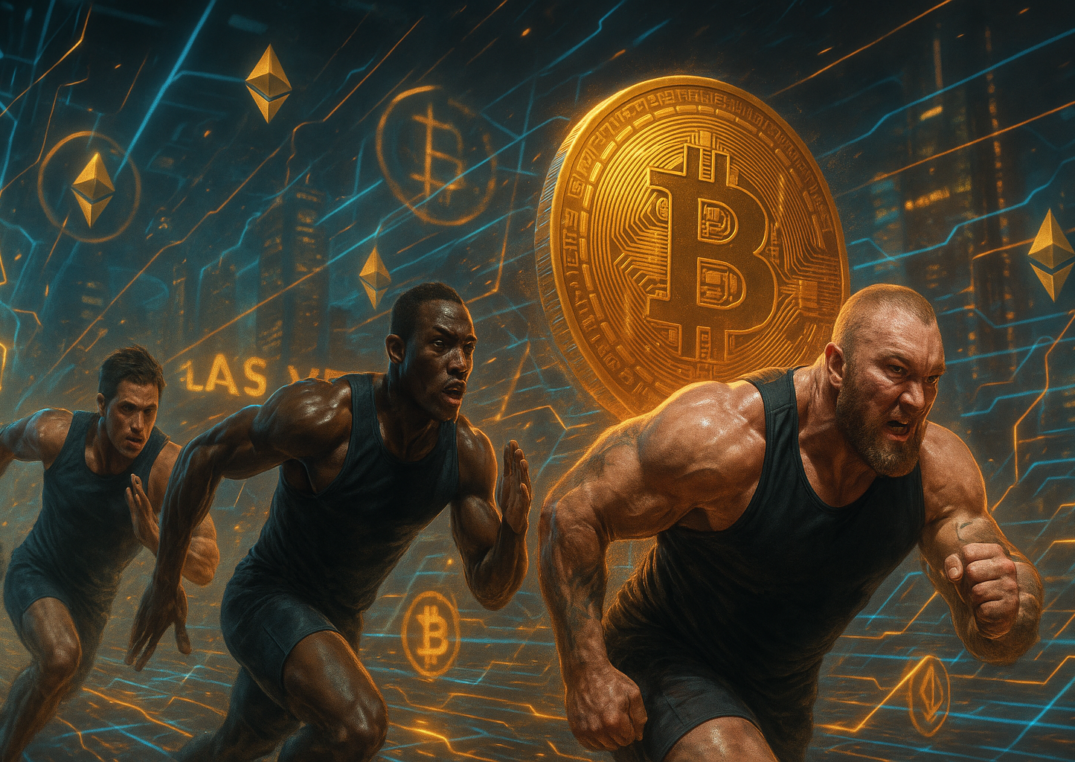
Enhanced’s debut showcase in Las Vegas pitched a technology-led sports experiment: a medically supervised, FDA-aligned performance‑enhancement framework paired with an online‑first distribution strategy that leaned on influencer livestreams and an exclusive U.S. streaming deal with Roku, all arriving just after the company began trading on the New York Stock Exchange at a $1.2 billion initial valuation.
Technology Overview
The central technology proposition behind Enhanced is not a gadget or piece of stadium hardware, but a system: structured, physician‑guided protocols intended to tailor performance programs to individual athletes. In the run‑up to competition, participants and their coaches gathered first in Abu Dhabi and then moved to Las Vegas, where the organization emphasized medically managed preparation rather than ad‑hoc supplementation. Many athletes declined to specify exactly what they were taking, citing a desire not to encourage copycats to attempt enhancements without professional oversight. That emphasis on supervision—and on adjusting regimens to the athlete—formed the core of Enhanced’s pitch to treat performance chemistry as a controlled, transparent input rather than a clandestine edge.
An outlier to the general discretion was Icelandic strongman Thor Björnsson, who publicly listed testosterone, deca‑durabolin, anastrozole, and halotestin among his substances. Despite coming from a discipline with looser norms than Olympic sport, he said he actually reduced his stack to meet Enhanced’s stated FDA requirements. His path into the event—after hearing about it on Joe Rogan’s podcast—underscored how the project has recruited talent and attention through digital channels as much as through traditional sport pathways.
How It Works
The degree of “enhancement” varied. Some athletes described strategies closer to microdosing than to the heavy regimens associated with notorious doping cases. One competitor said his 2026 plan mirrored what he had previously termed microdosing, while an organizer asserted that reported doses were a fraction of amounts linked to past Olympic scandals. Others reportedly avoided steroids and growth hormones altogether and opted for modafinil, a narcolepsy medication associated with focus, reflecting how cognitive alertness is being folded into the wider definition of performance.

Notably, several high‑profile competitors stayed entirely clean. Kerley competed without drugs and won, and sprinter Tristan Evelyn of Barbados also went drug‑free and topped Enhanced peers in two events. Their results posed a simple but consequential operational question: what does it mean for a showcase of enhancement protocols if the most visible victories are recorded by athletes who choose not to use them? Asked about that scenario the day before competition, a lead financier said the business was ultimately driven by attention: “Any debate is good for us.”
The morning schedule in Las Vegas illustrated the project’s ambitions beyond a single meet. Enhanced staged a medical symposium intended to preview its longer‑term health and performance agenda. The first speaker, longevity‑focused entrepreneur Bryan Johnson—known for his intensive personal anti‑aging regimen—offered a counterintuitive takeaway: amid talk of interventions, the priority was basic sleep. The message was a sharp, if deliberate, pivot from the more eye‑catching elements of enhancements and suggested the organization’s framing of performance as a spectrum that includes recovery and routines.
Industry Impact
Enhanced’s distribution model signaled a clear bet on digital. In Las Vegas, the spectacle was one of many weekend attractions, overshadowed by BTS stadium shows, the Golden Knights’ NHL playoff push, and No Doubt’s Sphere residency. Inside Resorts World’s Conrad hotel and the nearby casino floors, hulking athletes in branded gear moved through crowds of tourists and slot machines, but the bigger tremors were online. Bodybuilding creators streamed live to audiences on Kick and Twitch, and thousands tuned in on YouTube and Rumble. Despite earlier claims that multiple major broadcasters had sought rights, the group ultimately cut an exclusive U.S. deal with Roku—another nod to a platform‑native rollout designed for frictionless access rather than for gatekept pay‑per‑view.
The in‑person footprint mirrored that digital‑first posture. With no tickets sold to the public, the crowd skewed toward invited guests, investors, and influencers, with some attendees reportedly flown in from Los Angeles on a chartered jet. The “blue carpet” mixed pop culture and finance; rapper Tyga was the most recognizable celebrity on site, while rumors of an appearance by Peter Thiel did not pan out. The guest list reinforced the project’s investor‑led orientation and underlined that the primary audience sat beyond the grandstand and squarely on platforms.
The venue itself was a sprint. Enhanced said the arena cost $50 million and rose in roughly three and a half weeks—an aggressive build schedule that was still visible during the pre‑event media tour, where loose screws dotted the bleacher floors. The structural choices echoed the organization’s broader approach: move fast, centralize production, and optimize for broadcast. Seating ran along one open grandstand, with two rows of VIP suites opposite—again, an arrangement tailored to camera angles, controlled presentation, and the flow of invited guests rather than to mass walk‑up demand.
Technology, Risk, and Transparency
The event also spotlighted the tension between scientific detail and public safety. Most athletes refused to enumerate their protocols, citing the risk that amateurs would imitate them without supervision. Within that boundary, Enhanced’s medical positioning hinged on two pillars: individualized dosing and regulatory alignment. Accounts from inside the camp described modest doses relative to historical scandals, and at least one athlete reportedly limited his regimen to a non‑hormonal focus aid. Taken together, those narratives marked a deliberate effort to shift the optics of enhancement from clandestine abuse to regulated optimization—even as the presence of clean winners complicated the product‑as‑proof storyline.
For the broader sports industry, the Las Vegas test suggested how a made‑for‑streaming model can decouple gate receipts from audience growth. Enhanced’s backers were explicit that headlines—not turnstiles—drive the business. That logic favors influencer simulcasts, a cross‑platform presence on YouTube and Rumble, and a straightforward connected‑TV on‑ramp via Roku. In practice, it also means the project can treat the arena as a studio: a setting for content, sponsors, and debate, rather than a stadium that must sell out to succeed.
Future Implications
Enhanced’s near‑term challenge is coherence. If medically supervised protocols are the competitive differentiator, but high‑profile victories accrue to clean athletes, the showcase may function more as a forum for argument than as a validation of chemistry. The organization appears comfortable with that trade‑off, as reflected in comments that any debate fuels attention. The central tasks from here—improving transparency without encouraging unsafe imitation, resolving the optics of microdosing versus abstention, and aligning on a clear definition of performance that includes focus and recovery—are as much product design questions as they are athletic ones.
What Las Vegas ultimately delivered was a live demonstration of a new sports production stack: a controlled, health‑framed enhancement program; a rapid, camera‑friendly build; a curated in‑person audience; and a distribution engine that lives where audiences already are. Whether that configuration scales will be determined less by who sets records and more by how consistently the system can turn medical supervision, influencer distribution, and controversy into repeatable programming—exactly the fields Enhanced has staked out since it took its place on the New York Stock Exchange.