


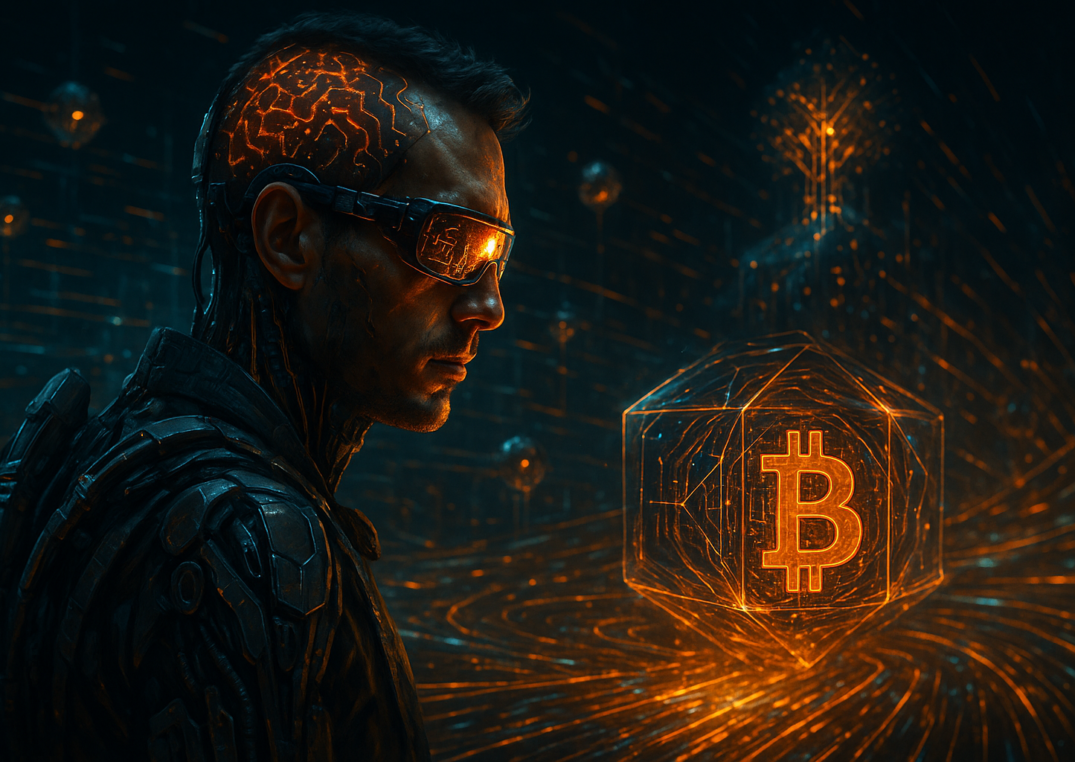
Four decades after cyberpunk popularized visions of “high tech, low life,” the genre’s core conflict—who controls powerful digital tools—has moved to the center of today’s debate over artificial intelligence and blockchain. Brain‑computer interfaces, AI‑enabled wearables, and advanced prosthetics are edging science‑fiction hardware into daily life, even as a handful of companies—OpenAI, xAI, Anthropic, Meta, and Google—exert outsized influence over how people access AI. Within cryptocurrency circles, that same struggle over control is visible in efforts to preserve information on permissionless networks and to push back against increasingly closed AI ecosystems.
AI Integration
Technologies once confined to fiction now shape real products and policy conversations. Brain‑computer interfaces like Neuralink, AI‑powered smart glasses, and more capable robotic prosthetics illustrate how human‑machine interaction is accelerating. At the software layer, the spread of proprietary AI models and subscription‑based services has reorganized access to computation and data. The result is a landscape where the underlying infrastructure for communication, work, and decision‑making is gated by a small set of platforms, with significant implications for crypto developers building on open networks.
Cyberpunk never focused solely on gadgets; it interrogated power. From William Gibson’s Neuromancer to Neal Stephenson’s Snow Crash, to Ready Player One and Cyberpunk 2077, creators imagined worlds where corporations rivaled states and where virtual and physical realities blended. Those narratives anticipated both the allure of augmentation and the risks of consolidation. Today, AI agents such as OpenClaw and Hermes Agent are emerging as personal, persistent systems—promising individual capability while reigniting questions about who sets the rules for access, training data, and interoperability with blockchains.
Technology Use Case
The crypto sector provides a clear illustration of code used to resist central control. Project Spartacus has leveraged the Bitcoin network to preserve the WikiLeaks Afghan War Logs, relying on Bitcoin’s durability to store contested information outside traditional gatekeepers. The discovery of the Bitcoin Whitepaper embedded in macOS underscored how deeply the protocol’s design has permeated digital culture. These examples reflect cyberpunk’s practical ethos: using decentralized tools to ensure permanence, transparency, and independence from corporate mediation.

That ethos also informs hardware and software experimentation at the edge. The growing interest in cyberdecks—custom computers assembled from recycled parts, open‑source software, and commodity components—signals a desire to reclaim agency over machines as proprietary AI services expand. The same tension applies to software development. As AI coding assistants become routine, some worry that overreliance could distance developers from understanding the systems they maintain, weakening communities’ ability to build alternatives not beholden to corporate platforms.
Industry Response
Resistance to concentrated AI power has moved from discussion boards to street‑level organizing. Organizations such as Stop the AI Race, the Machine Intelligence Research Institute, and community groups have opposed the rapid buildout of new AI data centers, citing concerns about water consumption, electricity demand, and environmental strain. In parallel, open‑source developers and privacy advocates are challenging the momentum of closed AI ecosystems, insisting that public accountability, transparent models, and user control remain non‑negotiable—principles long prioritized by blockchain communities.
Public attention has also turned to safety and the rhetoric surrounding AI. Some high‑profile commentary has framed advanced AI in near‑mythic terms, while scholars counter that the conversation itself can shape public understanding and policy. The debate has not been purely academic. In one incident, a suspect allegedly threw a Molotov cocktail at OpenAI CEO Sam Altman’s San Francisco home before issuing threats against the company’s headquarters, a reminder that the social temperature around AI can flash into real‑world violence. For an industry intersecting with crypto’s activist roots, the line between protest, policy pressure, and public safety remains under scrutiny.
Voices From the Early Internet
For Ken Goffman—better known as R.U. Sirius, co‑founder of Mondo 2000 and co‑author of the Cyberpunk Handbook—early internet culture blended experimentation with optimism. Personal computers and networks felt like tools that would redistribute power and loosen the grip of governments and corporations. Over time, he watched some of those same companies become central institutions and saw the web’s anonymity erode. The shift, symbolized for him by a platform demanding a real‑name identity, marked the end of a certain frontier sensibility.
Goffman also offered a pragmatic assessment of dystopia: reality is rarely cinematic. Grand narratives about apocalypse, he suggested, often give way to more mundane forms of control. That perspective resonates in crypto and AI alike, where material questions—access, pricing, licensing, energy, and policy—shape outcomes more than spectacle. The movement’s original subversive streak, he implied, must adapt to a world in which centralized platforms are the default rather than the anomaly.
Power, Not Chrome
Shira Chess, a media scholar at the University of Georgia and author of The Unseen Internet, argues that cyberpunk’s most durable insight was not about cybernetic limbs but about corporate power structuring digital life. The aesthetic “shiny parts,” she noted, were always embedded in a broader dystopia. Applied to AI and crypto, that framing places emphasis on who defines the terms of access, how platforms monetize attention and data, and whether independent builders can still create outside walled gardens.
Chess is skeptical of framing AI as supernatural or uncontrollable. She contends that casting AI as a “demon in the box” risks hardening misconceptions for future generations. Instead, she points to emerging DIY and open‑source practices—like cyberdecks—as signals of a renewed cyberpunk spirit seeking technologies that are not centrally constrained. For developers working with blockchains, that aligns with the longstanding drive to minimize dependencies on opaque systems.
Market Impact
For cryptocurrency and blockchain projects, the consolidation of AI raises practical considerations: reliance on proprietary models can shape how on‑chain analytics are produced, how user interfaces are mediated, and how communities access the compute needed for large‑scale applications. Conversely, the persistence of networks like Bitcoin provides a venue for archiving and coordination that does not depend on a single company’s roadmap. The contest between open and closed approaches, visible in both AI and crypto, is increasingly the market reality that traders, developers, and policy observers must navigate.
The emergence of personal AI agents such as OpenClaw and Hermes Agent adds another layer. If individuals can operate persistent, self‑improving assistants, questions about integration with wallets, governance forums, and data provenance naturally follow—reframing the role of autonomous software across decentralized systems. While implementation paths vary, the through‑line remains the same: capability without control does not guarantee autonomy.
The Next Wave
Cyberpunk has always needed something to resist, Chess observed, and in the current cycle that “corporate baseline” is plain to see. Whether through protests over AI data centers, open‑source pushes against closed models, or blockchain‑based preservation of contested information, the tension animating the genre is present in today’s AI‑crypto convergence. Goffman’s early optimism and Chess’s emphasis on power offer a shared lesson: tools matter, but governance matters more.
As Gen Z and Gen Alpha come of age with these technologies, their mixed feelings about the systems they inherited may shape the next iteration of internet culture. Forty years after Neuromancer, the chrome is no longer the surprise. The enduring news is the fight over who controls it—and how that fight will define the intersection of artificial intelligence, cryptocurrency, and the wider digital economy.
