


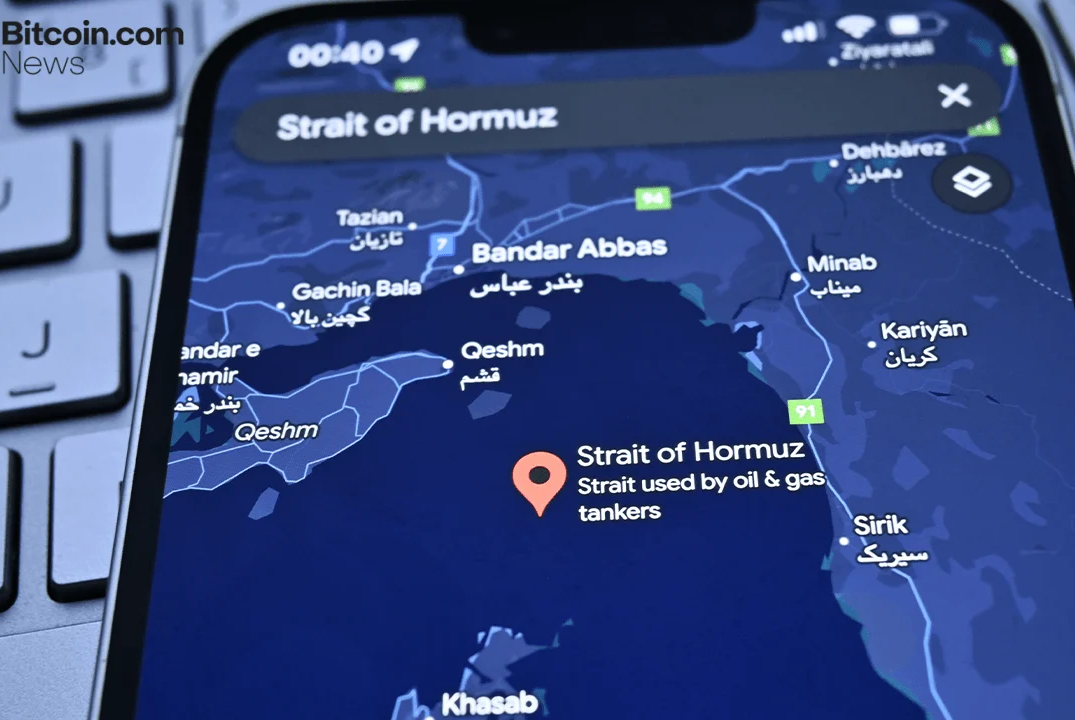
Bitcoin’s Price Volatility Mirrors Geopolitical Tensions Over the Strait of Hormuz
U.S. Blockade Blamed as Iran Shuts Strait of Hormuz Less Than a Day After Reopening
The turbulent landscape of cryptocurrencies has once again been tested by geopolitical developments, particularly the recent back-and-forth regarding the Strait of Hormuz. After announcing its brief reopening on April 17, 2026, Iran swiftly reverted to restrictions on the vital passageway within 24 hours. This sudden move, attributed to ongoing U.S. blockades, has sent ripples through the global oil markets and correlated digital asset trends, including Bitcoin’s volatile pricing.
Market Movement
On April 17, Bitcoin (BTC) surged briefly beyond the $78,000 threshold, reaching a high of **$78,348**—the highest it had struck since early February. This rally initially prompted optimism across the crypto trading sphere. However, the optimism swiftly evaporated on April 18 following the announcement that the strait would again be closed to commercial vessels without Iranian approval. Prices pulled back into the **$75,800-$77,100** range as markets reacted to the renewed geopolitical tensions.
Coinciding with Bitcoin’s movement, Brent crude oil prices hit a notable high after previously dropping approximately **9%** on April 17. The recent fluctuations in oil prices, bouncing between **$94-$96 per barrel**, are reflective of the instability ushered in by geopolitical events. Bitcoin’s relationship with the oil market underscores a critical dynamic: both assets are often sensitive to macroeconomic instability and energy market pressures.

Key Drivers
The Strait of Hormuz is a strategic maritime chokepoint through which roughly **20%** of the world’s oil and liquefied natural gas typically transits. Iran had initially announced the strait’s reopening amid a ceasefire related to ongoing conflicts in Lebanon, with the Foreign Minister Abbas Araghchi declaring it “completely open” for commercial traffic. This news briefly lulled markets into a sense of security, leading to Bitcoin’s subsequent uplift.
However, within mere hours, Iranian state media contradicted this optimism by announcing the strait would revert to its previous state of restriction, blaming the United States’ maritime blockade as a primary catalyst for this decision. Iranian officials—including Parliament Speaker Mohammad Bagher Ghalibaf—publicly accused former President Donald Trump of propagating “seven false claims” regarding the status of the waterway, emphasizing that arrangements about keeping it open indefinitely had never been established.
Investor Reaction
The investor sentiment regarding Bitcoin sharply shifted in tandem with the unfolding events. As news of the strait’s closure gained traction on April 18, Bitcoin’s price adjusted downward. Investors responded with caution amid fears of a potential “bull trap” scenario where earlier optimism fails to sustain due to escalating geopolitical tensions. The dips in Bitcoin prices coincide with fundamental changes in risk assessment among traders, further exacerbated by the broader uncertainty in energy markets.
The response from the crypto markets suggests a high degree of interconnectedness between traditional asset classes and digital currencies. As Brent and West Texas Intermediate (WTI) crude oil prices surged, even amidst initial declines, the future of Bitcoin remains closely tied to how such external factors play out on the global stage.
Broader Impact
The precarious situation surrounding the Strait of Hormuz not only affects oil traders and investors but also poses significant implications for the cryptocurrency market. With Bitcoin now hovering slightly above **$76,000** as of 8:30 a.m. Eastern Time on April 18, analysts worry that ongoing geopolitical developments could foster a climate of sustained volatility. A looming deadline tied to the ceasefire agreement by approximately April 22 raises questions about the durability of any short-term recovery in either the oil or digital asset markets.
Both the Iranian and U.S. government narratives remain at odds, with Trump framing the developments as progress toward a nuclear agreement, while Iranian officials denounce such claims as fictional. The Strait of Hormuz—vital for energy transit—continues to play a role as a leverage point amid international negotiations and fluctuating regional stability. It remains to be seen how these developments will further impact Bitcoin and the landscape of cryptocurrencies in the face of persistent geopolitical pressures.
