


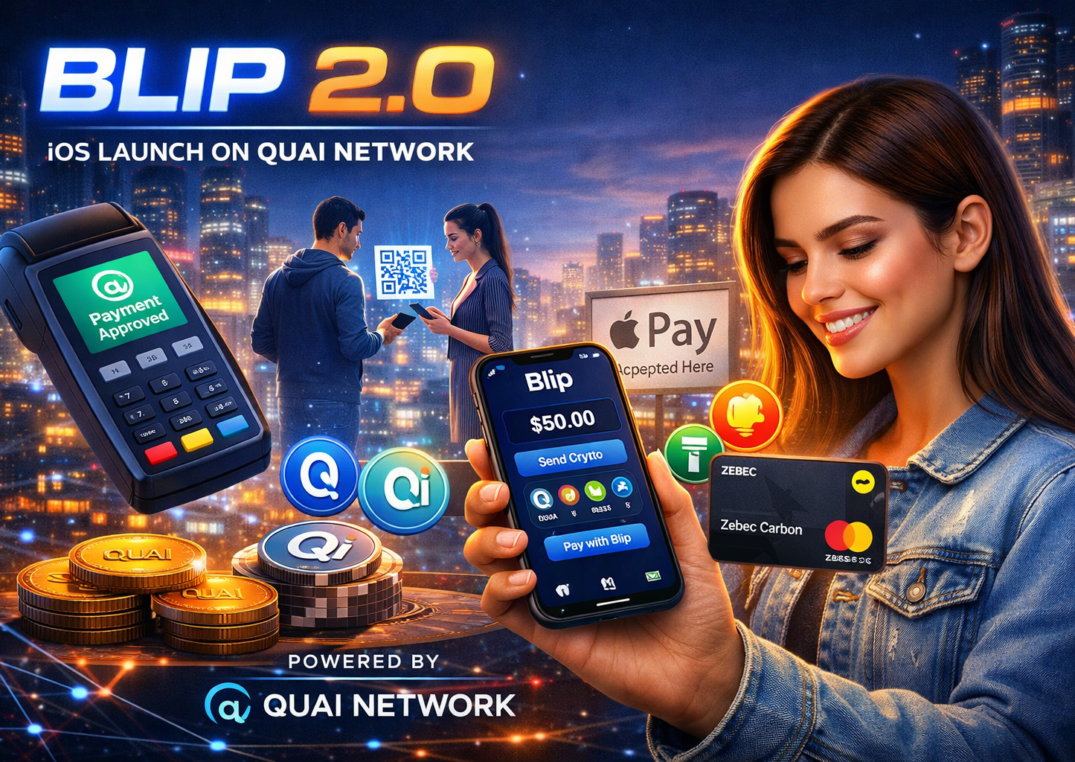
In a market often driven by speculation, leverage, and meme‑fueled hype, Blip is choosing a different direction—one that echoes the original vision behind Bitcoin. On April 27, 2026, the team released Blip 2.0 for iOS, positioning it as a true peer‑to‑peer payments app built on Quai Network.
The message is clear: crypto was never meant to be a casino. It was meant to function as digital cash. Blip is working to bring that idea back to life by focusing on fast, private, and permissionless payments that feel as simple as using any mainstream mobile app.
A Mobile Wallet Built for Real‑World Payments
Blip 2.0 is now available on the Apple App Store for devices running iOS 17 or later. The app is designed for everyday use, not just for crypto enthusiasts. Onboarding is quick and simple with no email, no KYC, and no account setup.

Users keep full control of their funds from the start. Private keys are secured through Apple’s Secure Enclave and protected with Face ID. A 12‑word recovery phrase provides backup access, and the interface is intentionally designed to feel familiar and approachable.
The experience is similar to Venmo or Cash App, but without intermediaries, custodial risk, or dependence on traditional banking rails.
Key Features of Blip 2.0
- Instant peer‑to‑peer payments using usernames, QR codes, or links
- Payment request links that allow anyone to pay with a debit or credit card
- Seamless spending through the Zebec Carbon Mastercard
- Apple Pay support for real‑world purchases
- Multi‑asset support including QUAI, Qi, and USDT
Funding is simple as well. Users can buy QUAI with Apple Pay or debit cards, or swap assets through integrations with Stripe and ChangeHero.
Transactions settle almost instantly on Quai Network, which supports up to 50,000 TPS with extremely low fees. This makes it practical for everyday payments rather than speculative trading.
Qi Flatcoin: Stability and Privacy in One Asset
Qi sits at the center of Blip’s ecosystem. It is a privacy‑focused flatcoin built on Quai Network. Unlike traditional stablecoins, Qi is not pegged to fiat or backed by centralized reserves. Its supply is tied to energy consumption, creating a model rooted in physical resource input rather than financial instruments.
The goal is to maintain stable purchasing power without relying on centralized entities.
Qi also prioritizes privacy through:
- One‑time wallet addresses
- Reusable payment codes
- Fixed‑denomination mixing similar to CoinJoin
- Off‑chain identity obfuscation
For users who care about privacy and want to avoid the transparency of most blockchains, Qi offers a more discreet way to transact.
Why Blip 2.0 Matters for Adoption
Crypto adoption has long been slowed by poor user experience. Seed phrases, gas fees, and complex DeFi interfaces create friction for everyday users.
Blip tackles these issues directly by offering:
- Self‑custody without complexity
- Payments that feel instant and intuitive
- A mobile‑first experience that mirrors mainstream apps
This approach aligns closely with the original idea behind Bitcoin: a system for peer‑to‑peer electronic cash.
As institutional adoption grows and regulations become clearer, usability will likely determine which platforms reach mass adoption. Blip’s focus on simplicity and real‑world utility gives it a strong advantage.
The Road Ahead for Blip and Quai Network
Blip 2.0 is more than a feature update. It signals a shift toward practical, everyday crypto usage. Android support is already in development, and more assets are planned. The Quai Network team is prioritizing long‑term usability over short‑term hype.
In a space often driven by price swings and speculation, Blip is betting on a future where crypto succeeds because it works seamlessly in daily life.
Final Thoughts
The iOS launch of Blip 2.0 may mark a turning point in how people interact with crypto. By focusing on speed, privacy, and simplicity, it brings back the core idea that made Bitcoin revolutionary.
If adoption grows through utility rather than speculation, platforms like Blip could quietly shape the next era of the crypto industry.
